


Converting DC to AC via power electronics may create waveform distortions. Harmonic distortion occurs when a power waveform contains frequency components at integer multiples of the fundamental grid frequency, causing the waveform to deviate from an ideal sine wave. Excessive harmonic distortion can degrade power quality, increase losses and heating in some equipment, and interfere with sensitive electrical devices. Managing this distortion is a primary technical challenge for engineers designing power architectures for commercial and industrial applications.
Mitigating such waveform issues demands high-precision hardware. At Ktech , we leverage in-house power-electronics R&D to deliver high-efficiency energy solutions. Our emphasis on stable performance, broad customizability and dedicated service helps clients satisfy strict grid-compliance standards. Strict R&D and manufacturing controls enable us to build power systems matched to real-world load requirements. Facility managers may consult our engineering team for complex power-quality solutions.
The Mechanics of Pulse Width Modulation
The fundamental cause of harmonic generation lies directly within the internal switching mechanism used to execute the DC-to-AC conversion. Modern inverters commonly use PWM control to switch power semiconductor devices rapidly and synthesize an AC waveform. While highly effective for general power conversion, this rapid, high-frequency switching naturally introduces residual voltage pulses that do not align perfectly with the fundamental electrical frequency.
The switching process introduces high-frequency components into the output waveform, which must be managed through modulation, filtering, and control techniques to limit harmonic distortion. Filtering and control techniques are commonly used to limit unwanted harmonic components and reduce their impact on connected equipment and the electrical network, causing measurable interference with sensitive microelectronics, monitoring sensors, and automated communication devices.
Interaction with Non-Linear Electrical Loads
Beyond the internal switching mechanics, the specific types of devices connected to the power network heavily influence the presence of harmonics. Non-linear electrical loads—such as variable frequency motor drives, computer power supplies, LED lighting circuits, and heavy-duty battery chargers—do not draw current in a smooth, continuous sine wave. Instead, they pull electricity in abrupt, short pulses.
When these harmonic currents flow through the impedance of the power source and distribution network, they can contribute to voltage waveform distortion. Managing this interaction requires power electronics capable of rapid dynamic load adaptation, delivering stable voltage even when connected facility equipment exhibits irregular consumption patterns.
Grid Impedance and System Resonance Factors
The external electrical environment and existing infrastructure also play a critical role in the proliferation of wave distortion. Grid impedance varies significantly depending on the geographical location, physical age of the transmission infrastructure, and distance from the main utility distribution transformer.
When an installation connects to a weak grid characterized by high impedance, the harmonic currents generated by routine power conversion create much larger voltage distortions than they would on a robust grid. Furthermore, internal output filters, such as standard LCL filters used to physically smooth the AC waveform, can interact with the inductive characteristics of the local power grid. This interaction can trigger localized harmonic resonance and increase distortion at the point of connection.
Evaluating a Reliable Solar Inverter Supplier for Distortion Control
Mitigating these complex electrical issues requires advanced hardware deployment and highly careful system design. As a dedicated solar inverter supplier, we incorporate power electronics and filtering technologies designed to control harmonic content and support compliance with applicable grid requirements.
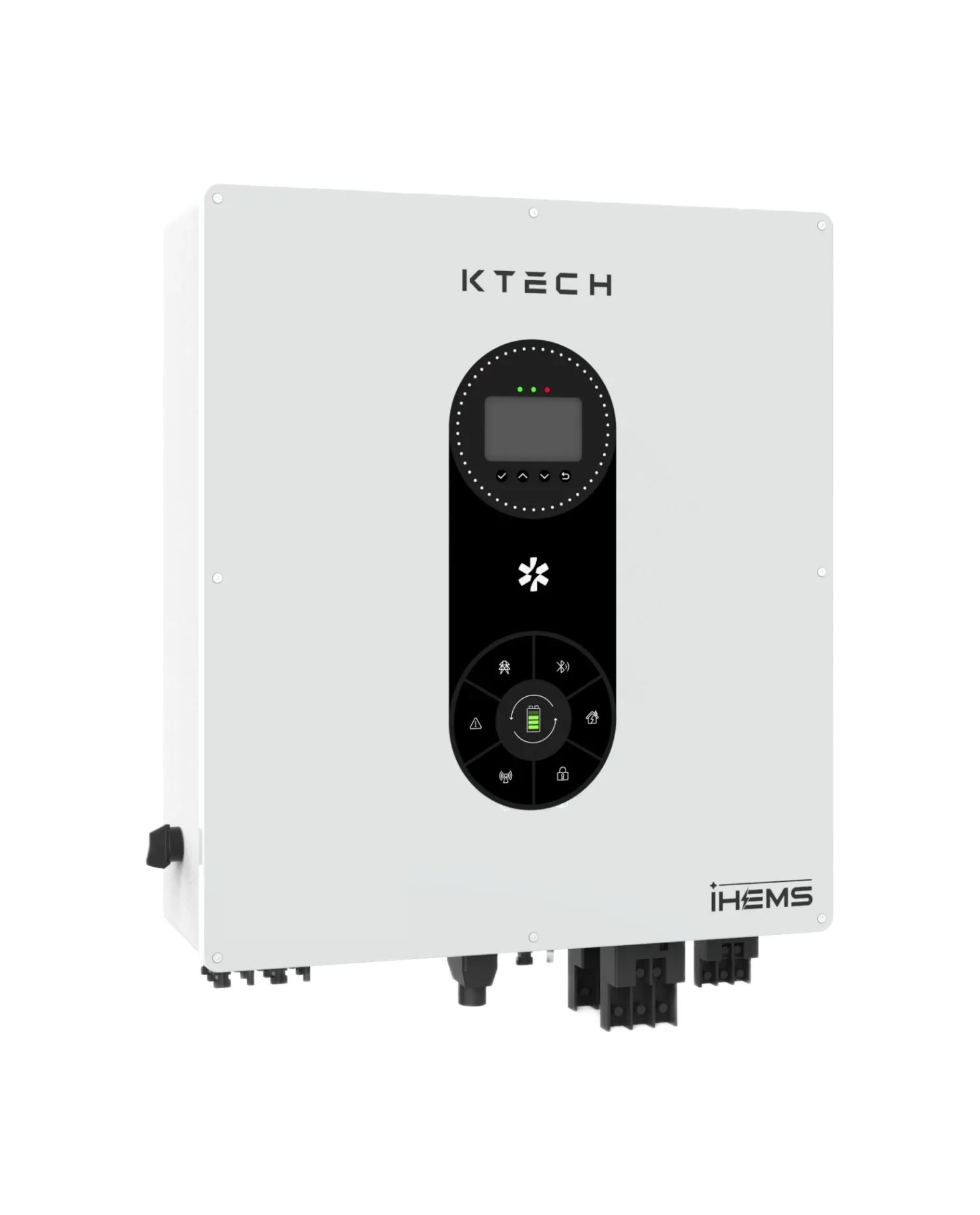
For applications facing strict local grid compliance standards, our portfolio includes versatile hardware such as the Hybrid Inverter 7-12kW Split Phase American Grid models (KE-7K/7K5/8K/10K/12KD5LSUN) and the high-capacity Hybrid Inverter 30-60kW Three Phase model (KE-30KD5H3UN).
Hardware Sizing and Long-Term Power Quality
Properly sizing the overall energy architecture is another vital operational step in minimizing grid distortion. Operating conversion equipment close to its limits can reduce system headroom and make power-quality management more demanding, particularly when nonlinear loads are present.
When designing an installation, electrical engineers assess the anticipated non-linear load profile to select hardware with sufficient operational headroom. By choosing units that comfortably manage baseline facility loads while absorbing sudden consumption spikes, operators maintain a significantly cleaner sine wave.
Our self-developed units are heavily engineered to tolerate these variable load stresses, directly reducing the thermal strain on internal transformers and helping limit additional thermal stress associated with excessive harmonic currents.
Effectively managing power conversion irregularities remains a fundamental requirement for building highly stable, reliable decentralized energy networks. We support industry clients with self-developed power electronics capabilities, configurable solutions, and technical service for different application requirements.
By actively focusing on long-term product stability and providing comprehensive service support from the initial facility design phase through extended operation, we assist operators in meeting applicable power quality and grid compliance requirements. We invite you to contact our technical engineering team to discuss your specific infrastructure needs, request detailed product specifications, and establish a reliable energy foundation for your operational facility.



