


Residential solar systems are becoming more connected. Generating electricity from rooftop photovoltaic modules is only one part of the process. Households also need to decide when solar electricity should be used, stored, or combined with grid power. AI-based control is changing these decisions by using operating data to coordinate different parts of the home energy system. This makes smart home energy management increasingly relevant to residential solar applications.
At Ktech, we focus on inverter technology and energy solutions for overseas distributors, installers, and other solar industry partners. Our in-house R&D capabilities support customized inverter configurations for different market requirements, while training and after-sales services help partners with local project needs. Distributors and installers developing residential solar solutions can contact us to discuss product requirements and suitable configurations.
Why Home Solar Needs More Than Power Generation
A traditional residential photovoltaic system has a relatively straightforward task. Solar modules generate electricity during daylight hours, and an inverter converts the electricity into a form that household appliances can use. However, household consumption does not always follow the same pattern as solar generation.
A family may generate more solar electricity around midday but consume more electricity in the evening. Weather changes can also affect daily photovoltaic output. Electricity tariffs and household routines add further variables. These differences create a need for better coordination between generation, consumption, storage, and grid electricity.
AI energy management can process operating data from these different parts of the system. Instead of treating each component separately, the control system can use information about generation and household demand to support energy scheduling. This changes home solar from a simple generation setup into a more coordinated energy network.
How AI Changes Daily Energy Decisions
One practical role of AI is analyzing patterns. A home energy system can collect historical information about photovoltaic generation and electricity consumption. When sufficient data is available, software can identify recurring patterns and use them as a reference when adjusting energy use.
For example, household demand may regularly increase after residents return home in the evening. Solar output, however, may already be falling at that time. An energy management system can compare generation, storage, and load information before allocating available electricity according to its configured control strategy.
Weather conditions can make this process more dynamic. Solar generation varies with sunlight, cloud cover, seasons, and installation conditions. When energy management software works with relevant operating data, the control strategy can respond to changes rather than relying only on the same fixed schedule each day.
Four Parts Behind an Integrated Home Energy System
AI-based control becomes more useful when the main parts of a residential solar installation can exchange operating data. A typical arrangement may involve photovoltaic generation, an inverter, energy storage, and household electrical loads. Each component performs a separate task, but changes in one part can influence how the others operate.
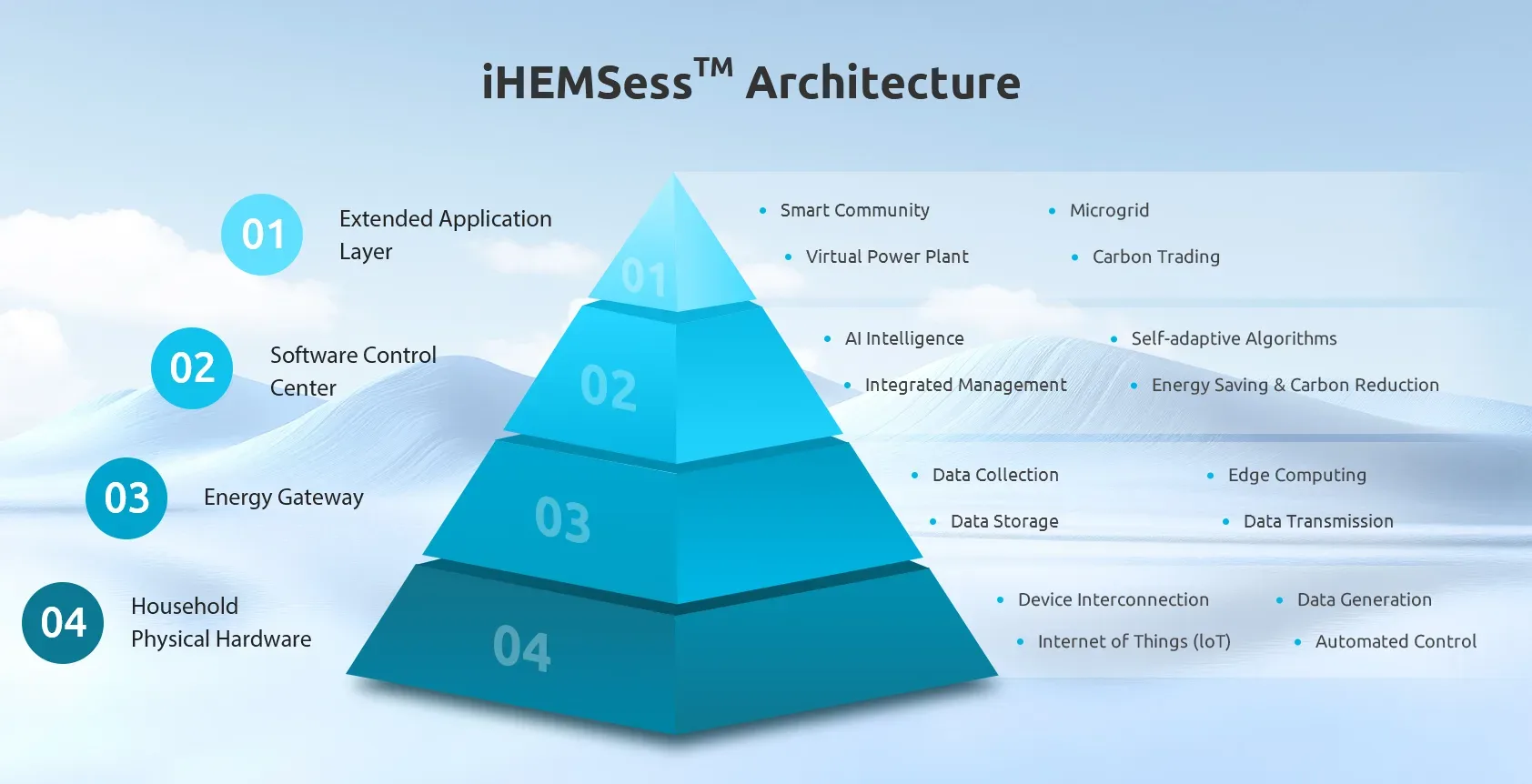
Our Power Generation System converts solar energy into DC electricity. The inverter then manages a key stage of energy conversion. It integrates smart controller and inverter functions, optimizes the current and voltage of photovoltaic modules to improve power generation efficiency, and converts DC electricity into AC electricity for residential physical hardware.
The Energy Storage System uses high-energy-density, long-life battery modules to store surplus electricity for later use and support continuous power supply. Our current business focus is on inverter products. Battery products are offered as part of system solutions through cooperation with external suppliers rather than being positioned as our primary product line.
Residential Physical Hardware includes electrical devices connected to the îHEMSess™ system. Smart meters and controllers allow real-time monitoring and intelligent control of these devices. Bringing generation, conversion, storage, and household loads into a connected structure provides the operating data needed for coordinated energy management.
What Smarter Control Changes Inside the Home
One practical value of smart home energy management is clearer visibility of household energy flows. Instead of seeing only how much electricity photovoltaic modules produce, users can understand how electricity moves between solar generation, household loads, energy storage, and the grid at different times of day.
This information can reveal useful consumption patterns. A household may find that certain electrical loads regularly coincide with periods of lower solar generation. It may also identify periods when photovoltaic production exceeds immediate household demand. Such observations can help residents understand when stored electricity may have a practical role in daily energy use.
Automated control can also reduce repeated manual adjustments. AI does not mean that every energy decision follows the same rule. System configuration, available equipment, household consumption, local electricity conditions, and user settings still influence operation. Data analysis gives the control system more information for adjusting its strategy as operating conditions change.
Why AI Also Changes Solar System Planning
The shift toward AI-based management affects more than household operation. It also changes how distributors, EPC companies, and installers approach residential system planning. Inverter configuration, device communication, monitoring functions, storage arrangements, and household load connections need to be considered together rather than as unrelated parts.
Regional differences add another layer to project planning. Electricity systems, installation practices, customer needs, and technical requirements can vary between markets. For overseas distributors and installers, this means product configuration may need to match local project conditions instead of following one fixed arrangement.
Technical support also matters during implementation. Installers may need guidance when configuring equipment, while distributors may need product training for local sales and technical teams. After-sales communication becomes relevant when questions arise during installation or operation. These factors can influence how smoothly intelligent energy functions are introduced into residential solar projects.
A More Connected Direction for Residential Solar
AI is changing home solar by bringing previously separate energy decisions into a connected control process. Solar generation, inverter operation, battery storage, household consumption, and grid electricity can be considered together. This gives households a clearer view of energy flows and allows control strategies to respond more closely to changing generation and consumption patterns.
At Ktech, our in-house R&D capabilities support inverter development and customized configurations for different market requirements. We also provide training and after-sales support for overseas distributors, agents, and installers as they develop local solar projects. Partners evaluating residential inverter or energy management requirements can contact us to discuss their application needs and suitable product configurations.



