



Solar inverter sourcing involves more than comparing power ratings and purchase prices. For wholesalers, distributors, installers, and EPC teams, a suitable product also needs to match local grid conditions, installation practices, certification requirements, and after-sales expectations. When buyers evaluate an OEM solar inverter, these factors should be reviewed together because a mismatch discovered after shipment can create extra testing, installation, or service work.
Start With the Target Market and Application
Before requesting quotations, buyers should define where the inverter will be sold and how it will be used. A residential hybrid system has different operating requirements from an off-grid installation or a small commercial project. Grid type, battery configuration, load profile, and expected system architecture should be identified before a supplier recommends a product.
Local electrical conditions also matter. Buyers should clarify grid voltage and frequency, as well as whether the project requires single-phase, split-phase, or three-phase equipment. These details affect product selection and installation planning. Giving suppliers complete application information at the inquiry stage can reduce unnecessary revisions later.
It is also useful to separate essential requirements from optional functions. A distributor may need certain communication or monitoring functions for local installers. Another market may focus more on system compatibility. A written requirement list gives engineering and purchasing teams a clearer basis for supplier discussions.
Check Compliance Before Discussing Volume
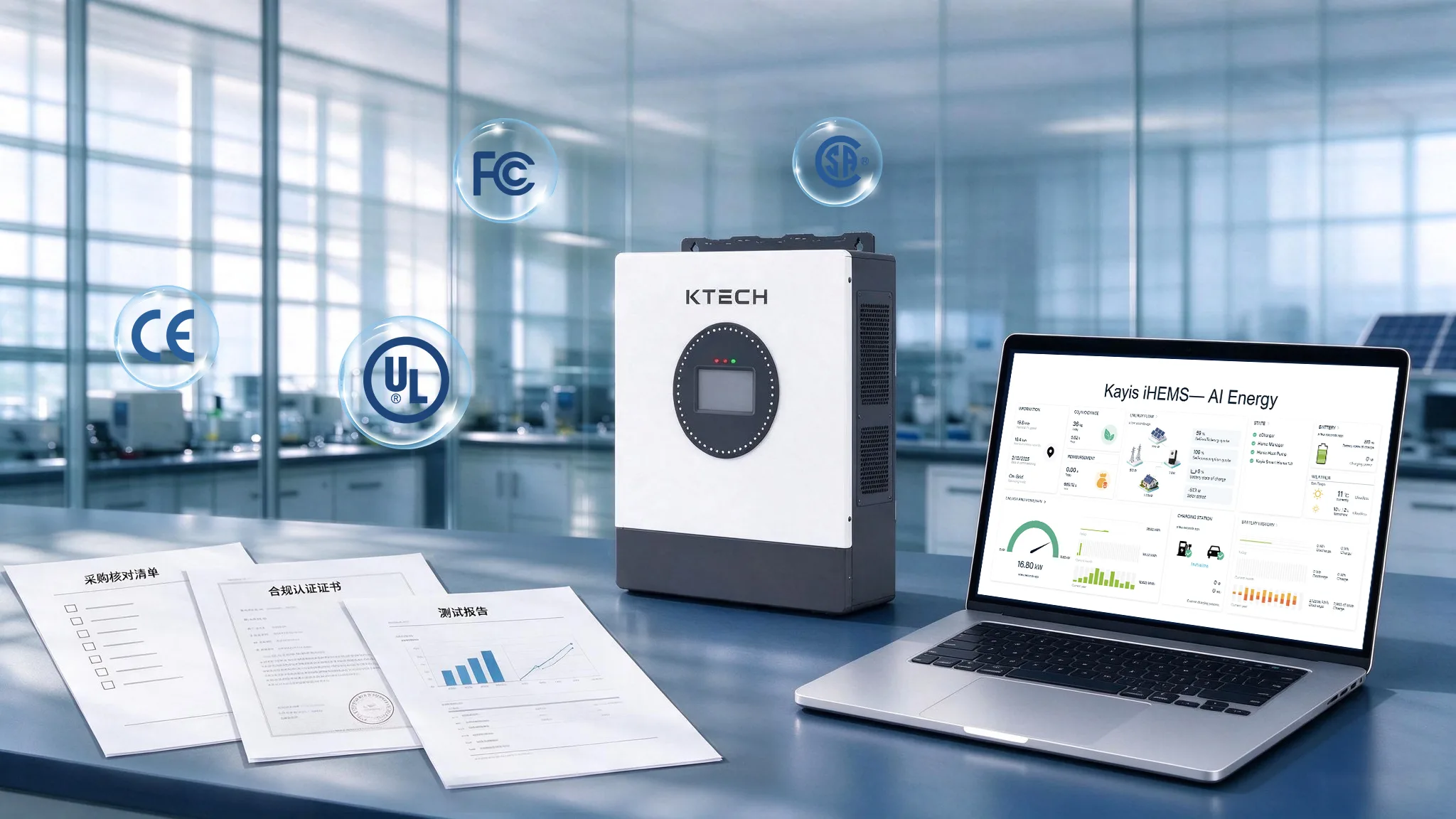
Compliance should be reviewed early rather than after commercial terms have been agreed. Different countries and regions may apply different grid connection, electrical safety, and electromagnetic compatibility requirements. Buyers should ask which certifications apply to the exact inverter model under consideration instead of assuming one certificate covers a complete product range.
The certificate, test report, model designation, and product specification should be checked together. Differences in model names can matter when documents are submitted to distributors, installers, utilities, or local authorities. Buyers should also confirm whether the available documents are current and applicable to the intended destination market.
This review can affect the purchasing schedule. If additional testing or documentation is required for a particular market, preparation may take longer. Discussing compliance before placing a volume order gives both parties time to address technical and documentation requirements.
Evaluate Customization at the Engineering Level
Customization can mean different things between suppliers. A logo or packaging change is different from modifications involving software, interfaces, system functions, or hardware. Buyers sourcing an oem solar inverter should define the required changes clearly and ask which parts can be supported by the supplier’s engineering team.
In our current product strategy, inverters are a core focus. Our development work includes hybrid inverters and MPPT products. Energy storage lithium batteries can also be incorporated into system solutions. Our hardware and software development capabilities allow us to discuss differentiated requirements with distributors and agents according to their project needs.
The practical question is how each proposed change will be developed and verified. Buyers can discuss technical feasibility, sample evaluation, testing arrangements, documentation updates, and final configuration approval. This creates a clearer customization process before larger orders are planned.
Review Product Verification and System Compatibility
Wholesale purchasing makes consistency an important consideration. A product evaluated during the sample stage should correspond with the specifications confirmed for production. Buyers can ask how product development, verification, production checks, and configuration management are handled before shipment.
Technical evaluation should also consider the inverter as part of a system. A hybrid installation may involve photovoltaic input, battery storage, grid connection, household loads, communication equipment, and monitoring software. Compatibility should therefore be discussed around the actual planned configuration rather than broad assumptions about individual components.
We develop integrated hardware and software and work on the îHEMSess™ system for energy management. Our company also has a team covering engineering, technology development, marketing, and operations. This structure allows technical discussions to consider both inverter functions and their connection with wider energy management applications.
Consider Support After Product Delivery
Supplier evaluation should continue beyond the initial purchase order. Overseas distributors and installers may need technical documents, product training, troubleshooting procedures, and a clear channel for field questions. These resources become particularly relevant when a distributor introduces a new inverter range to its local installation network.
Buyers can ask who handles technical questions and what information is needed when reporting a field issue. They can also review how product updates and installation questions are communicated. Clear responsibilities make it easier for purchasing teams, technical staff, and local installers to coordinate after delivery.
Training is another practical part of market preparation. Our technical support system includes the îHEMSess™ Academy training program. We use training and after-sales support when working with wholesalers, retailers, and other overseas partners. Our products and services have been promoted through partnerships in markets including Africa, the United States, and the European Union.
Compare Suppliers With the Same Sourcing Checklist
A structured checklist makes supplier comparison more useful. Buyers can record target applications, electrical requirements, required documentation, customization details, sample testing results, production arrangements, and after-sales procedures. Using the same criteria for each supplier makes differences easier to identify.
Price remains part of the decision, but the quoted unit cost does not show the whole sourcing picture. Additional certification work, unclear customization procedures, limited technical communication, or difficult field support can create extra work after purchasing. These factors should be reviewed before the commercial decision is finalized.
Preparing for a More Practical Sourcing Decision
Wholesale inverter sourcing works better when technical requirements are clarified before volume and price become the main discussion. Market compatibility, compliance documents, customization scope, verification procedures, system integration, and post-delivery support all deserve attention. Reviewing these areas early gives buyers a more practical basis for evaluating potential suppliers.
At Ktech Solar, we combine in-house R&D, customizable inverter development, product verification, training, and after-sales support for overseas partners. We work with distributors, agents, installers, and other solar and storage professionals on requirements for different markets. Buyers preparing an inverter sourcing project can contact our team to discuss application details, customization needs, compliance expectations, and technical support before moving to the next purchasing stage.



