


It gets increasingly harder to find a reliable residential hybrid inverter brand than it used to be. The market has expanded fast, and decision-making has become more complex. A hybrid inverter that fails 18 months after commissioning costs you a service call, a relationship, and probably a review.
We evaluated the leading brands on installer-relevant criteria: technical versatility, certifications, monitoring quality, warranty depth, support responsiveness, and compatibility with today’s battery and grid requirements. This list covers the brands that consistently show up on shortlists for good reason.
Quick Comparison
| Rank | Brand | Best For | Key Specs | Warranty |
| 1 | Sungrow | Volume installs | SH series, 3–25kW, iSolarCloud | 10 years |
| 2 | Ktech ESS | Installer programs, ODM, split-phase + three-phase | 5–60kW, OEM/ODM, iHEMS | 5/10 years |
| 3 | Fronius | European grid compliance | GEN24 Plus, 3.8–10kW, Solar.web | 10 years |
| 4 | SolarEdge | Optimizer-based systems, shading | Home Hub 3–10kW | 12 years |
| 5 | GoodWe | Budget-conscious retrofit, battery flexibility | ES-US series, 5-11.4kW, SEMS+ | 10 years |
Sungrow
Best for: High-volume residential installers who need proven reliability

Sungrow is recognized by S&P Global Commodity Insights as the world’s No. 1 in PV inverter shipments. The SH series hybrid inverters cover 3 to 25kW for residential applications and serve more than 150 countries. Their iSolarCloud monitoring platform is mature, includes remote diagnostics, and supports both app and web dashboards.
What stands out:
• The SH-T(three-phase) and SH-RS (single-phase) series support high-voltage modular battery stacking via the SBR/SBH range, with plug-and-play BMS communication
• Typically 10-year warranty on residential units, with options to extend to 12 years in some markets
• PID zero functionis built in, improving long-term PV module performance and yield
Consider if: You’re installing plenty of residential systems a year and need predictable spares availability and a brand homeowners already recognize.
Ktech ESS
Best for: Installers who want high customization flexibility along with comprehensive training and strong after-sales support
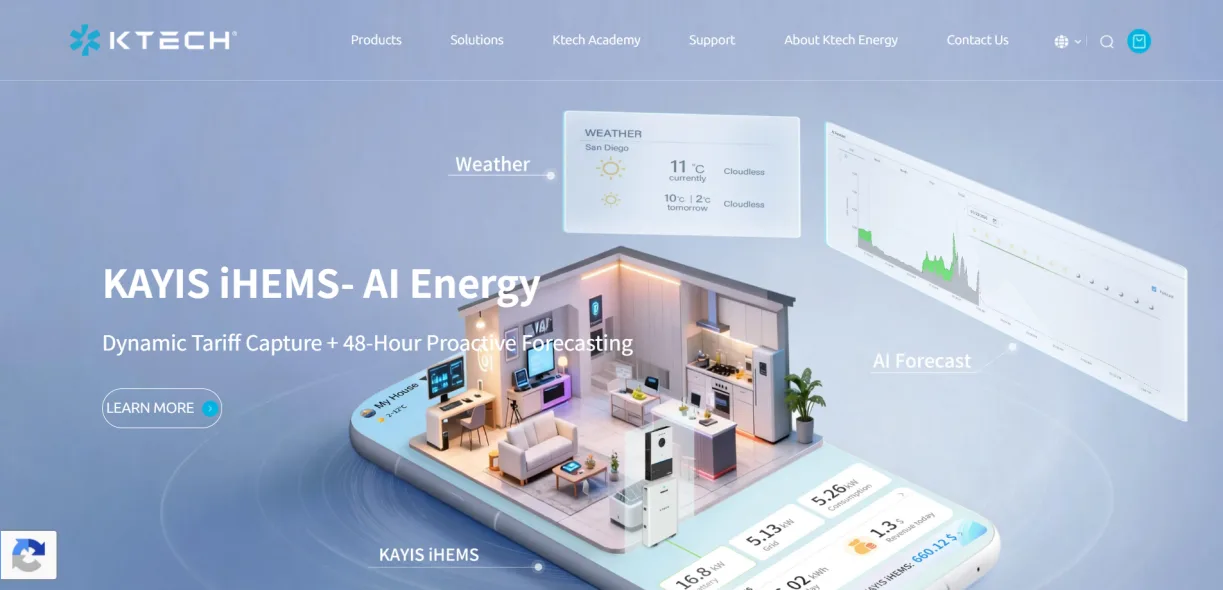
Ktech ESS is a global inverter and energy storage manufacturer offering hybrid, off-grid, on-grid, and AC-coupled inverters alongside lithium and sodium-ion battery systems. Their hybrid range spans 5kW to 60kW with dedicated models for North American split-phase, three-phase Americas grids, and European grids. You are not adapting a single-market product for a different regulatory environment.
What stands out:
• MPPT tracking efficiency of >99% with up to 10 units paralleled, IP66 rating, and operating range of -40°C to +60°C
• The KAYIS iHEMS AI system provides 48-hour proactive energy forecasting and dynamic tariff capture, giving homeowners a meaningful bill-reduction story that installers can use as a sales differentiator
• Ktech Academy provides structured hardware installation training and ongoing technical support, reducing the learning curve for new-to-brand installers
• ODM/deep customization support is available, which matters for installers building a branded product offering or operating in specialized markets like VPP-connected deployments
Consider if: You need split-phase hybrid capability for the US/Canadian market, want a brand that actively supports installer training, or are looking for a supplier where ODM conversations are genuinely possible.
Fronius
Best for: Installers operating in markets that favor European-made products
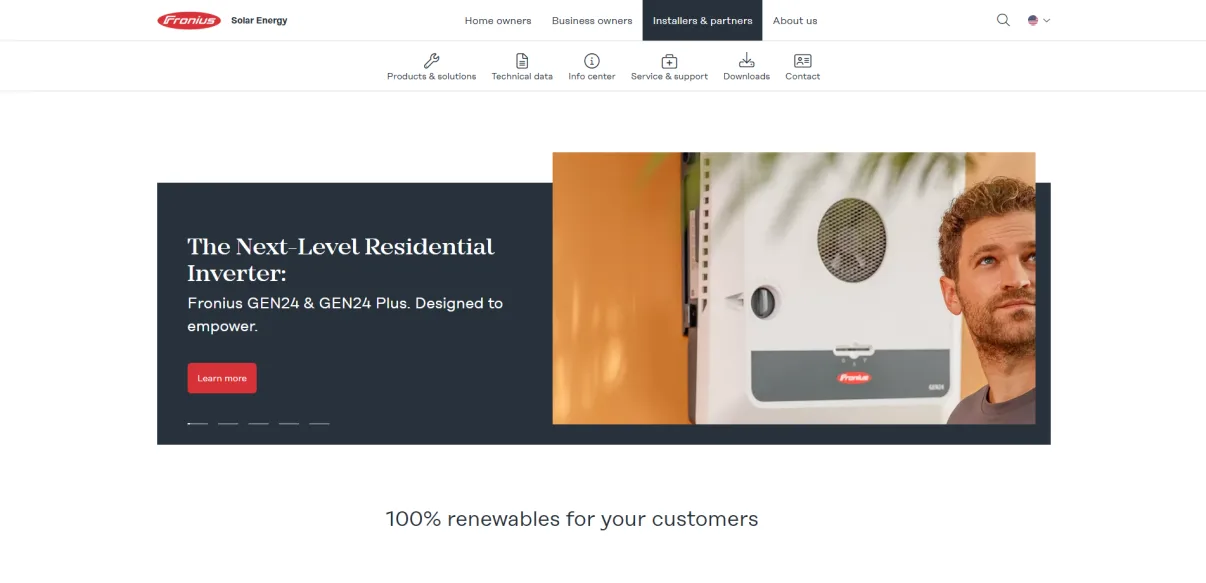
Fronius has manufactured solar inverters in Austria for over three decades and remains a trusted brand by professional installers across the globe. The GEN24 Plus series (3.8–10kW, single-phase) integrates battery backup without requiring a separate unit and includes a PV Point for direct power supply to connected home appliances.
What stands out:
• Active cooling extends component life and maintains output in high ambient temperatures, a genuine differentiator for hot-climate installs
• Heat sinks use 100% recycled aluminum and the unit is designed for repairability, which appeals to premium buyers and simplifies long-term maintenance
• Solar.start commissioning app and push-in spring terminals reduce on-site install time
Consider if: You’re in a market where European-manufactured hardware is a commercial differentiator.
SolarEdge
Best for: Complex roof layouts with shading, multiple orientations, or panel-level monitoring requirements
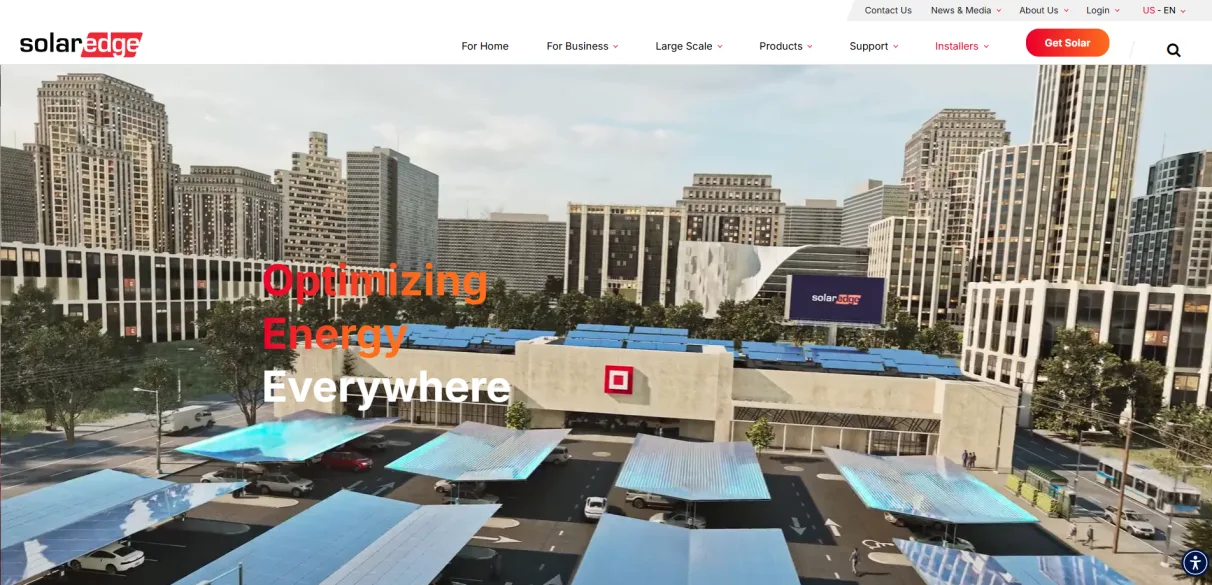
SolarEdge pioneered the power optimizer architecture and has an installed base spanning more than 130 countries. The Home Hub series (~3–10kW) pairs with optimizers to deliver 99% peak efficiency and module-level MPPT, while the Home Battery integration creates a DC-coupled storage path that avoids the conversion losses of AC-coupled alternatives.
What stands out:
• 99% peak efficiency is the highest on this list for a string-based residential system
• 12-year manufacturer’s warranty onall inverters
• The Home Energy Management interface integrates EV charging, battery dispatch, and grid export control in one platform
Consider if: You’re installing on partial-shade roofs, homes with complex orientations, or customers who specifically want panel-level monitoring data.
GoodWe
Best for: Retrofit projects and battery-flexibility scenarios
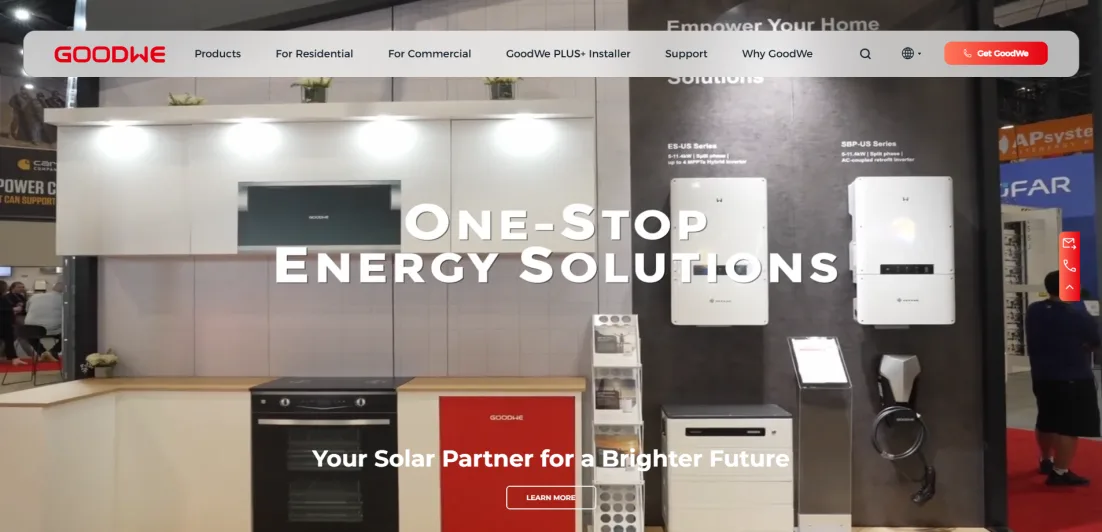
GoodWe is a Shanghai-listed manufacturer with inverter shipments across more than 100 countries. The ES-US series covers 5 to 11.4kW for residential use and carries certifications across most major grid standards. Their SEMS monitoring portal provides free cloud monitoring.
What stands out:
• Wide battery compatibility without forcing customers into a proprietary storage ecosystem, a genuine advantage for retrofit projects
• 10-year standard warranty with competitive pricing; the BH series is consistently positioned as a strong value option by independent installer comparisons
• Available in three-phase configurations, covering a wider range of residential load profiles than some competitors
Consider if: You’re handling energy storage retrofits, or you have customers who already own third-party batteries and need an inverter that plays well with them.
How to Choose the Right Hybrid Inverter Brand for Your Business
Verify certifications match your market before specifying. UL 1741 SA and Rule 21 are mandatory in most US jurisdictions under NEC 2020. VDE-AR-N 4105, AS 4777, and G99 govern European and Australian markets respectively. A unit certified for only one region cannot legally be interconnected in another.
Ask about replacement unit lead times, not just warranty length. A 12-year warranty means little if a failed unit takes 8 weeks to replace and costs you a callback plus lost customer goodwill. Request written documentation of your distributor’s replacement turnaround before committing volume.
Factor commissioning time into margin calculations. Brands with dedicated installer apps and pre-wired connectors can meaningfully reduce on-site hours per job, which matters as much as hardware cost on smaller residential installs.
Test monitoring before you commit. Download each manufacturer’s monitoring app and create a demo account. The app your customers call you about at 9 pm on a Saturday is part of your product.
Conclusion
For high-volume residential installs where proven reliability matters most, Sungrow remains the default shortlist choice. For installers who need genuine split-phase coverage for the US/Canadian market, strong certifications, an AI-powered energy management story, and a supplier open to ODM arrangements, Ktech ESS is the standout option worth a closer look. For premium European-market projects where brand prestige is part of the sale, Fronius GEN24 Plus is hard to displace.



