


A solar energy inverter connected to the utility grid must do more than convert direct current (DC) from solar panels into alternating current (AC). It must also respond correctly when grid conditions change. Anti-islanding protection is the function that helps a grid-connected inverter stop energising the utility-connected circuit when grid conditions indicate that continued parallel operation is not permitted. This helps reduce safety risks to utility workers, potential damage to connected equipment, and adverse effects associated with unintended islanding.
For solar installers, system integrators, and equipment buyers, understanding anti-islanding protection is therefore part of evaluating an inverter’s grid compatibility—not simply an optional technical feature.
What Is Islanding in a Solar Power System?
Islanding occurs when a distributed energy resource (DER), such as a solar installation, continues energising a section of an electrical network after that section has become disconnected from the utility grid. The U.S. Department of Energy (DOE) identifies islanding as an important consideration for distributed energy resources because an isolated circuit can remain energised even though the utility supply has been interrupted.
Consider a simple rooftop solar system connected to a building and the utility network:
| Operating condition | Solar inverter response |
| Utility grid is operating normally | Supplies power according to the system’s operating mode |
| Utility grid experiences a qualifying abnormal condition | Monitors the grid and responds according to applicable requirements |
| Utility connection is lost | Anti-islanding functions can initiate disconnection |
| Intentionally islanded microgrid | Requires a suitable control and protection architecture |
The distinction between unintentional islanding and intentional microgrid operation is important. A properly designed microgrid can intentionally disconnect from the utility and continue supplying selected loads. DOE describes this as intentional islanding. That operation requires controls, switching equipment, and a system architecture designed specifically for islanded operation.
For a conventional grid-connected solar installation, however, the inverter cannot simply assume that a utility outage means it should continue operating independently. The system must determine whether grid conditions remain suitable for continued parallel operation.
How Does Anti-Islanding Protection Work in a Solar Inverter?
Anti-islanding protection works by monitoring electrical conditions at the grid connection and causing the inverter to cease energising the utility-connected circuit when the conditions indicate that continued parallel operation is not permitted.
The inverter can monitor parameters such as voltage and frequency and apply protection and control logic defined for its particular grid-interconnection requirements. The exact detection method and response settings depend on the inverter design, applicable standards, and local utility requirements.
The basic process can be understood as follows:
- Monitor:The inverter continuously observes relevant grid conditions.
- Detect:The control system identifies an abnormal condition or loss of the grid.
- Evaluate:The inverter determines whether the detected condition requires a change in operating state.
- Disconnect:When the applicable trip conditions are met, the inverter stops energising the utility-connected circuit.
- Reconnect:Normal grid-connected operation resumes only when the required conditions for reconnection are satisfied.
This process matters because simply detecting a power interruption is not the entire engineering problem. Voltage and frequency can sometimes remain within relatively normal ranges for a short period after a utility interruption, particularly when local generation and load happen to be reasonably balanced. Consequently, anti-islanding protection is designed as part of a broader grid-interconnection protection scheme rather than as a simple “power outage sensor.”
Why Is Anti-Islanding Protection Required for Grid-Connected Solar Inverters?
Anti-islanding protection is required because an unintended island can create safety and power-quality risks when a distributed generator continues energising a circuit that utility personnel believe has been disconnected. DOE specifically notes that an islanded electrical system can injure workers or damage connected equipment.
There are several practical reasons for requiring appropriate islanding protection:
- Worker safety:A supposedly de-energised circuit could remain energised if distributed generation continues feeding it.
- Equipment protection:An isolated system may experience abnormal voltage or frequency conditions.
- Grid coordination:Distributed generators must respond predictably to abnormal grid conditions.
- System restoration:Utilities need distributed resources to follow established interconnection behaviour during outages and restoration.
IEEE 1547-2018 is particularly relevant here. The IEEE standard establishes technical requirements for the interconnection and interoperability of distributed energy resources with electric power systems. Its scope includes abnormal conditions, power quality, islanding, testing, commissioning, and periodic verification.
This means that anti-islanding should not be evaluated in isolation. When selecting an inverter, buyers should consider the complete grid-interconnection framework applicable to the installation.
What Standards Should Buyers Check When Selecting a Solar Inverter?
The applicable interconnection and safety standards should be checked against the project’s location and grid requirements before selecting an inverter. A product carrying a particular certification or standards reference does not automatically mean that it is suitable for every grid or installation.
For North American projects, two important references for solar inverter compliance are IEEE 1547 and UL 1741. IEEE 1547 addresses interconnection and interoperability requirements for DERs, including islanding and testing. UL Solutions identifies UL 1741 as the standard covering inverters, converters, controllers, and interconnection system equipment used with distributed energy resources.
| What to verify | Why it matters |
| Applicable grid-interconnection standard | Determines required operating and protection behaviour |
| Inverter certification | Helps demonstrate conformity with applicable requirements |
| Anti-islanding function | Addresses unintended islanding during grid abnormalities |
| Grid voltage and frequency compatibility | Helps verify that the inverter matches the intended electrical system |
| Local utility requirements | Additional requirements may apply to a specific interconnection |
| Installation and commissioning requirements | Correct settings and verification support compliant field operation |
Installers should therefore avoid choosing an inverter solely because its rated power matches the photovoltaic array. Electrical compatibility, certification, protection functions, and local interconnection requirements are equally important selection criteria.
How Does Ktech Address Anti-Islanding Protection in Its Inverters?
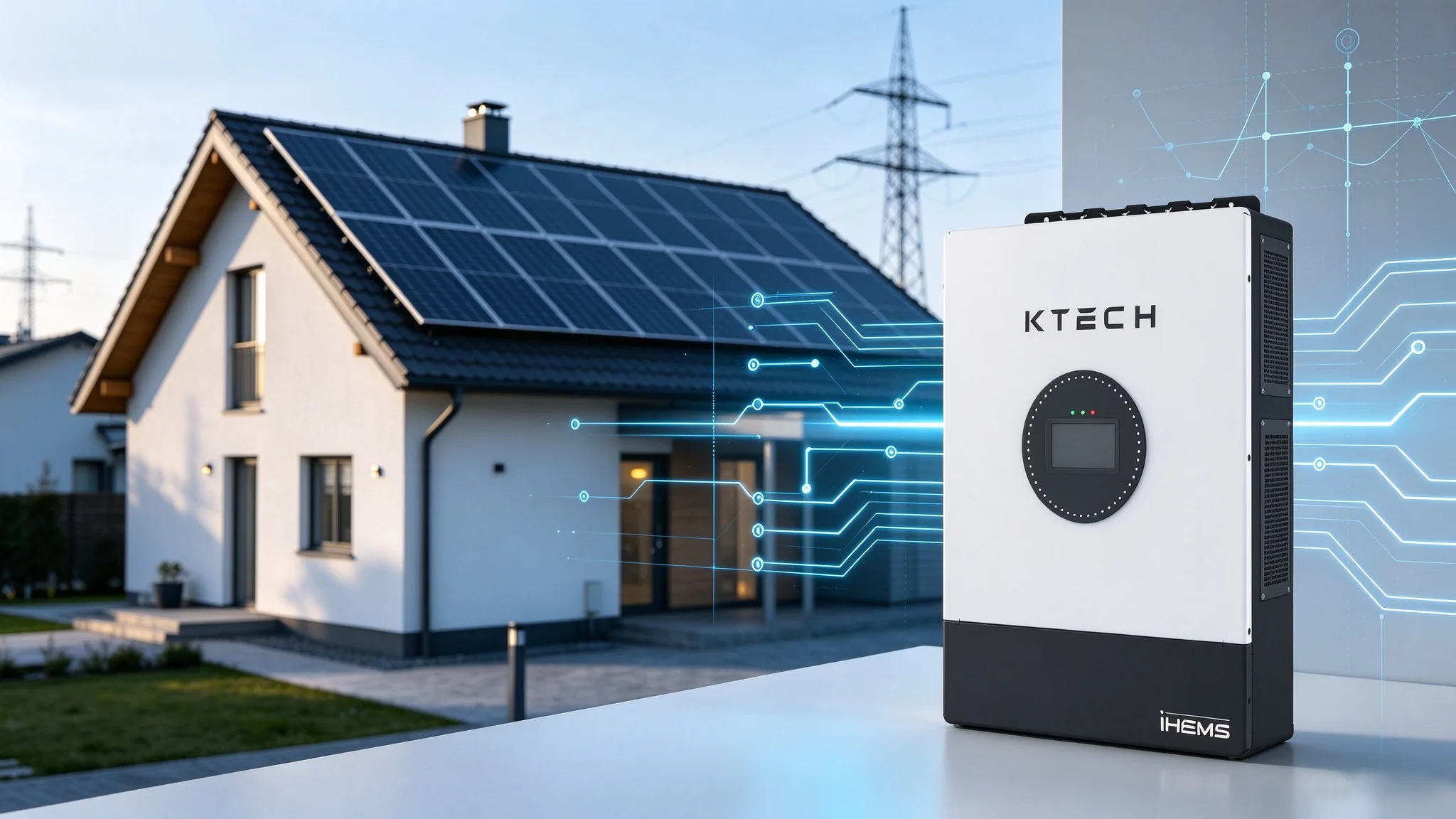
Ktech lists anti-islanding protection as an integrated protection function on multiple inverter models, including hybrid and AC-coupled products for different grid markets. Its product portfolio includes hybrid, off-grid, on-grid and AC-coupled inverters for residential and industrial & commercial applications.
For example, the Ktech KE-7K/7K5/8K/10K/12KD5LSUN hybrid inverter lists anti-islanding protection among its integrated protection functions. It also lists UL 1741 and IEEE 1547. The product range provides rated active power from 7,000 W to 12,000 W, depending on the model.
Ktech also publishes anti-islanding protection for other product families. Its KE-7K/7K5/8K/10K/12KD6LSUN North American hybrid inverter lists anti-islanding, ground-fault detection, surge protection, AFCI, GFCI, and RSD compatibility among its integrated protection functions and lists UL 1741 and IEEE 1547 as applicable certification and interconnection references.
For European-grid applications, the Ktech KE-30KD5H3EN hybrid inverter lists anti-islanding and grid monitoring among its integrated protection functions and identifies multiple grid-tie standards, including IEC 62116 and EN 50549.
These examples also demonstrate why product-market matching matters. Anti-islanding protection is a general technical requirement, but the applicable certification, grid code, voltage, frequency, and installation requirements depend on the target market and system architecture.
How Should Buyers Evaluate Anti-Islanding Protection When Choosing a Solar Inverter?
Start by checking the inverter’s documented protection functions and certifications against the requirements of the intended installation. This approach provides a more complete basis for evaluation than comparing nominal power or efficiency alone.
A practical evaluation sequence is:
- Identify the grid market.Determine the country, utility, nominal voltage, frequency, and connection type.
- Define the operating mode.Establish whether the system is grid-tied, hybrid, off-grid, or part of an intentional microgrid.
- Check documented protection functions.Look specifically for anti-islanding or islanding protection and related grid-monitoring functions.
- Verify applicable standards.Check the manufacturer’s published certifications against the standards required by the project.
- Review local interconnection requirements.Utility rules may add requirements beyond the general product certification.
- Confirm installation settings and commissioning procedures.Correct equipment selection does not replace correct installation and commissioning.
The key question for a buyer is therefore not simply “Does this inverter have anti-islanding protection?” It is “Does this inverter provide the documented protection and grid-interconnection compliance required for my specific project?”
What Should Buyers Remember About Anti-Islanding Protection?
Anti-islanding protection is a fundamental part of safe grid-connected solar operation because it helps prevent an inverter from unintentionally energising an isolated portion of the electrical network. It connects inverter control, electrical protection, utility requirements, and worker safety into one system-level function.
IEEE 1547 provides an important framework for DER interconnection, while UL 1741 addresses inverter and interconnection equipment used with DERs. Ktech shows anti-islanding protection across multiple inverter models, with different products carrying certifications and grid standards appropriate to their intended markets.
Before deployment, installers and system buyers should verify the inverter’s anti-islanding function, applicable standards, grid compatibility, and local interconnection requirements as part of the overall system review.



